
If you have recently lost money to a cryptocurrency or online investment scam, you are likely being hunted again- this time by “Recovery Experts.”
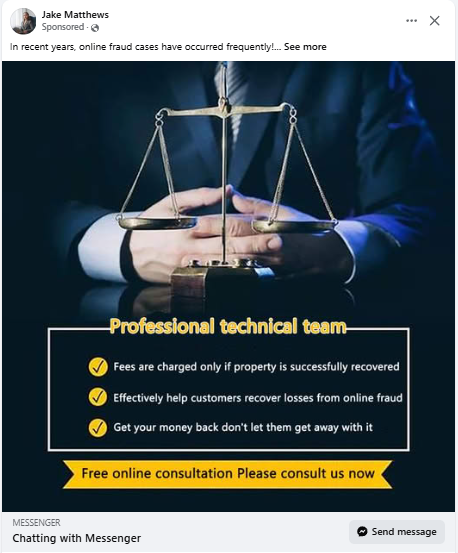
A wave of sophisticated, sponsored advertisements is currently flooding Facebook and Instagram. While they look professional, using terms like “Law Group,” “Legal Aid,” and “Technical Teams,” they are almost exclusively secondary scams designed to steal even more money from victims.
1. The Psychology of Deception
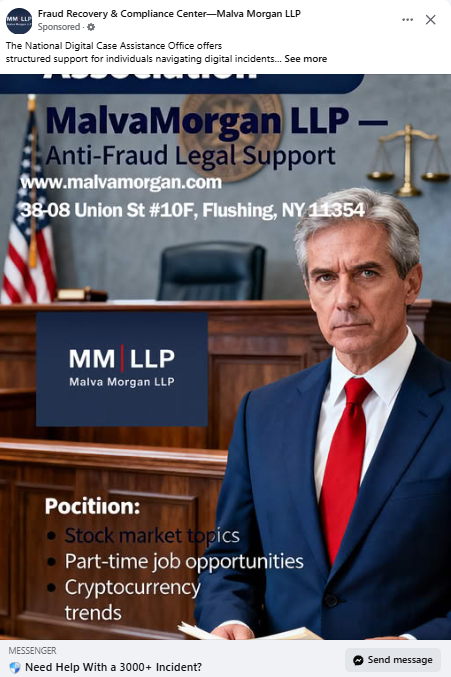
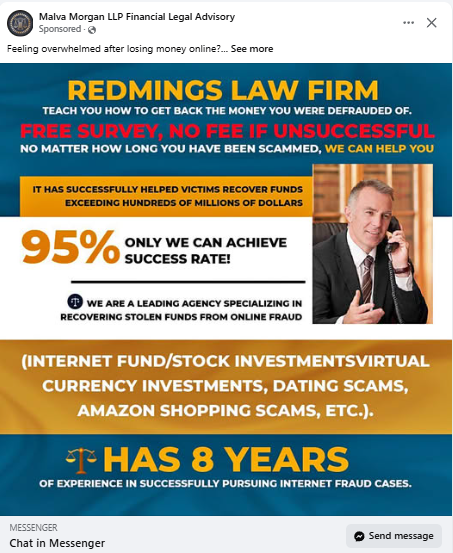
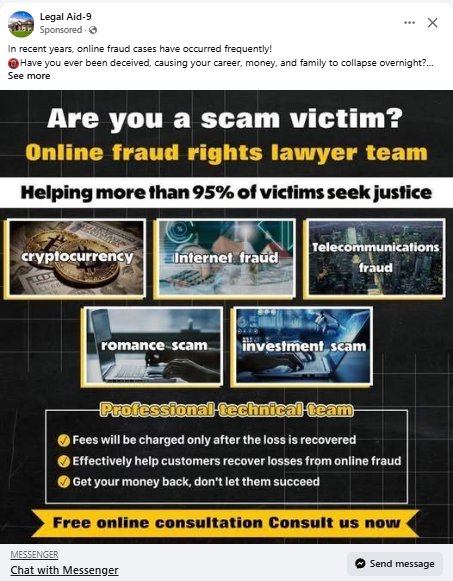
Based on the ads for Norvex Law Group, Malva Morgan LLP, and Legal Aid-9, these scammers use specific psychological triggers to lower your guard:
- The “Success Rate” Myth: Nearly every ad claims a 95% to 99% recovery rate. In the world of international law and blockchain, such a success rate is statistically impossible.
- The Authority Facade: They use images of “Lady Justice,” American flags, and men in expensive suits (often AI-generated or stolen stock photos) to mimic the appearance of a legitimate U.S.-based law firm.
- The False Sense of Urgency: Ads like Mary D. Thomas promise results in as little as 3 days. Real legal recovery through subpoenas and international police cooperation takes months or years, not days.

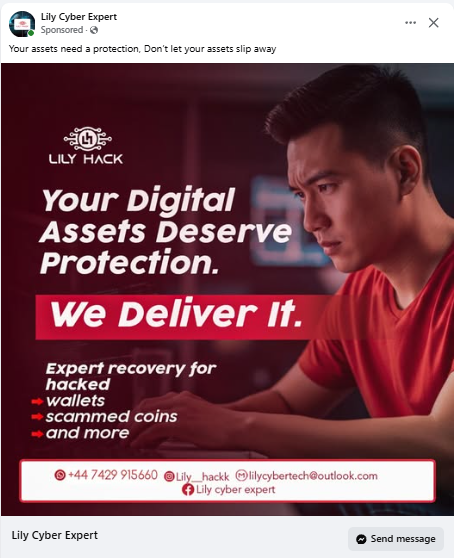
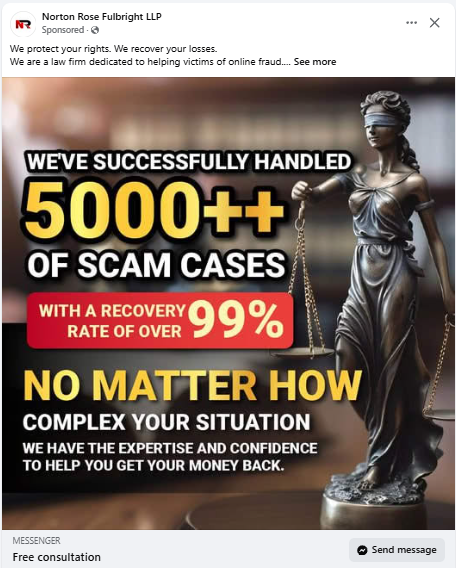
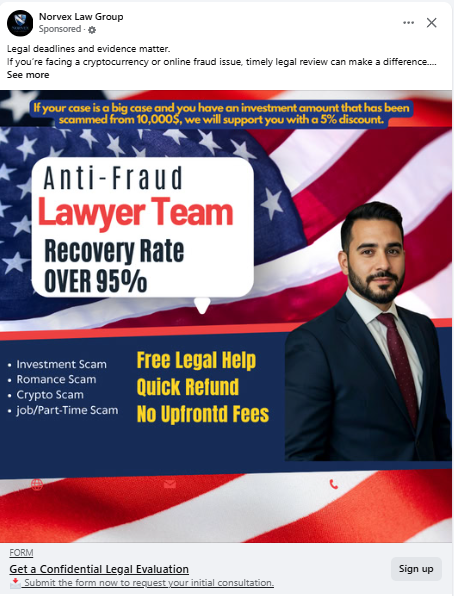

2. Red Flags Found in the “Evidence”
By analyzing the screenshots, we can identify several “Red Flags” that prove these are fraudulent:
| Red Flag | Example from Ads | The Reality |
| Impersonation | Use of the name “Norton Rose Fulbright LLP” | This is a real, world-class law firm. They never advertise on Facebook to recover crypto for individuals. Scammers steal their logos to look credible. |
| Impossible Tech | “Expert recovery for hacked wallets” (Lily Hack) | Once a transaction is on the blockchain, no “technical team” can reverse it without the private keys of the thief. |
| Grammar/Typos | “No Upfrontd Fees” or “Pocitiion” | Legitimate multi-million dollar law firms do not have glaring typos in their primary advertising materials. |
| Messenger-Only Contact | “Chat in Messenger” / “Send Message” | Real law firms use official email domains and physical office consultations, not anonymous Facebook chat. |
3. How the “Recovery Scam” Works
The scam follows a predictable, heartless script:
- The Bait: You click “Sign Up” or “Send Message.” They ask for the details of your loss.
- The “Good News”: Within hours, they claim their “technical team” has located your funds in a “shadow wallet” or on a “frozen exchange.”
- The Hook: They tell you the money is ready to be returned, but there is a small “obstacle.”
- The Pay-to-Play: They ask for an upfront payment for:
- IRS or Tax clearance
- Wallet activation fees
- Court filing fees
- Blockchain gas fees
- The Ghosting: Once you pay the “fee,” they either ask for more or block you entirely.
In one documented case, a victim who lost $18,000 to a fake investment platform was later targeted by a “recovery firm” promising a 97% success rate. After paying $2,500 in supposed blockchain clearance fees, the firm disappeared. The wallet address provided as “proof” had no connection to the original theft.
4. The Hard Truth About Crypto Recovery
Cryptocurrency is designed to be immutable. If your money has been moved to a private wallet or a non-compliant exchange, it is virtually impossible for a private “hacker” or “lawyer” to get it back.
The only legitimate ways to attempt recovery are:
- Law Enforcement: Filing a report with the FBI (IC3), Interpol, or your local Cyber Police.
- Civil Litigation: Hiring a verified law firm (which you find yourself, not through a Facebook ad) to serve a subpoena to a centralized exchange if the funds are sitting there.
5. Why Meta Is the Enabler
These scams are not hidden. They are paid advertisements.
Every one of these promotions is labeled Sponsored, meaning Meta has accepted money to distribute them at scale. Many of the advertisers:
- Use newly created pages
- Lack verifiable websites or legal registrations
- Repeatedly impersonate real organizations
Despite this, the ads remain active long enough to reach thousands of victims.
Meta profits from each click, view, and message – yet its advertiser verification and enforcement mechanisms consistently fail to stop financially destructive fraud before harm occurs.
6. Why Victims Are Targeted Again
Victims of financial scams are often placed on shared lists within criminal networks. These lists are built using:
- Data from previous scams
- Leaked contact databases
- Engagement with crypto-related content
- Interaction with “recovery” groups or ads
Meta’s advertising tools make it easy to target people who have already demonstrated vulnerability. This turns prior victimization into a predictive signal for future exploitation.
7. How to Protect Yourself
- Never share your seed phrase or private keys. No legitimate recovery process requires them.
- Do not pay to receive money. Any request for upfront fees is a scam.
- Block and report these ads to Meta as Scam/Fraud.
- Verify independently. Real law firms are found through bar associations – not Facebook ads.
Final Thought
If you have been scammed once, assume you are being watched.
In today’s fraud landscape, crypto recovery promises are the new phishing emails – designed not to help victims, but to finish the job.
If someone contacts you claiming they can recover your crypto, treat it as a scam until proven otherwise.
Source: Scamminder.com
| Name | Profile link | Archive | Ads url |
| Estefania Garcia | https://www.facebook.com/profile.php?id=61586173690467 | 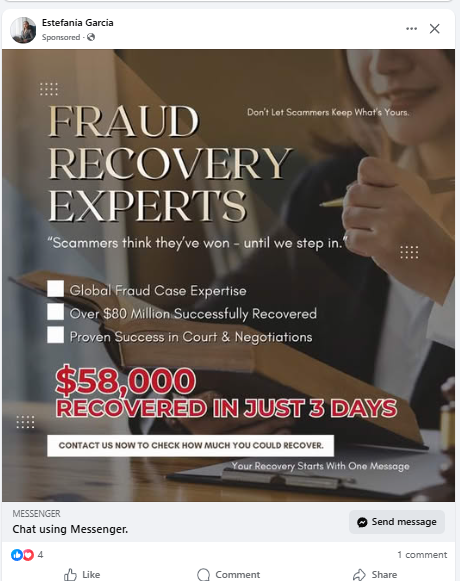 | |
| Crackdown Scam and Recovery Service | https://www.facebook.com/profile.php?id=61575524827804 | 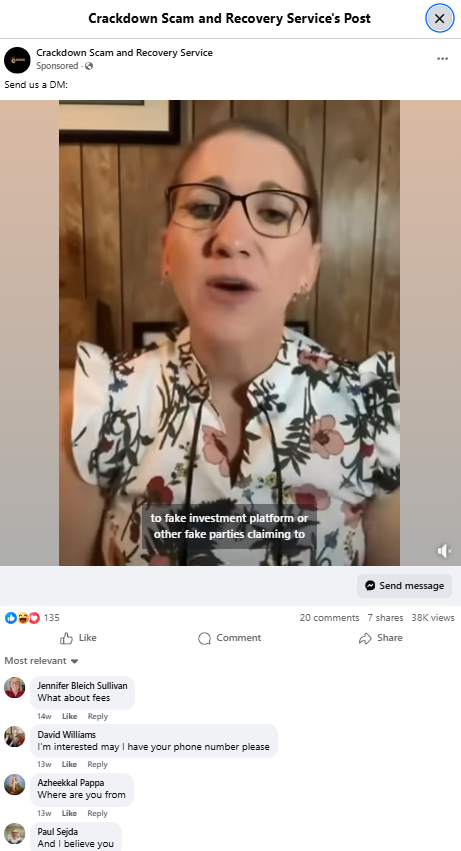 | https://www.facebook.com/reel/789527523578183/ |
| Chargebacktools | https://www.facebook.com/profile.php?id=61551914993250 | 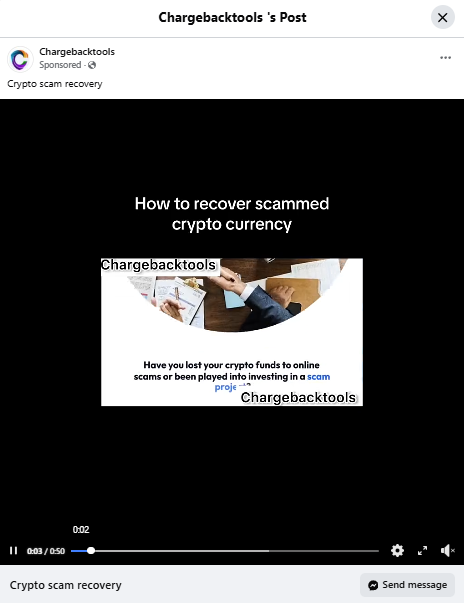 | https://www.facebook.com/reel/1898328784106481/ |
| Legitcryptoscamrecovery Inc | https://www.facebook.com/Legitcryptoscamrecoveryfirm | 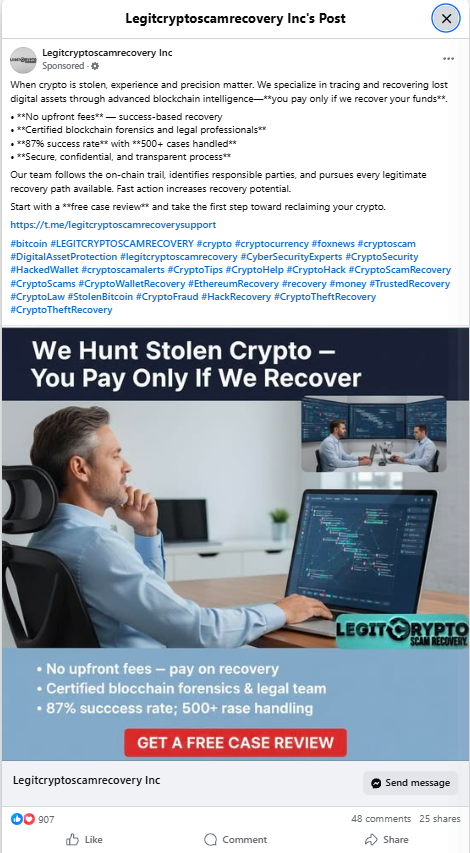 | https://www.facebook.com/Legitcryptoscamrecoveryfirm/posts/pfbid0jHMum9jjxH2gfQA8DJboJj27DTw4LDZNkNvYCrrkWs8vcJQbqRvvhNsW8nC8kSpel |
| Crypto Recovery Experts | https://www.facebook.com/profile.php?id=61554509081267 |  | https://www.facebook.com/permalink.php?story_fbid=pfbid0KTR9BpxiCqjd15jBbvziVC7ZUkUtt5KAvTM6EcsrmVJVxbUZ4D2guceSeB4pyNzgl&id=61554509081267 |
| Fund Trackers INTL | https://www.facebook.com/profile.php?id=61578694237036 | 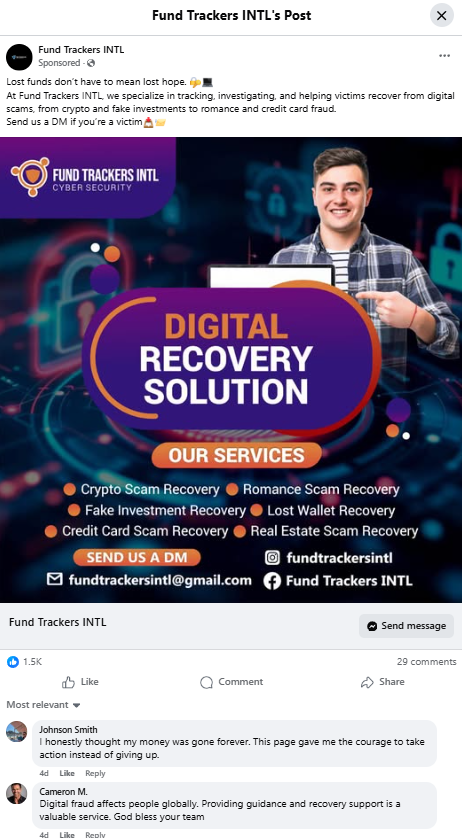 | https://www.facebook.com/permalink.php?story_fbid=pfbid035Yu4EgSmLJB6cchKdpeXN4mHDa41VbbG6srgZndBPdbCq26xzfB6qKF3DLDuwYCxl&id=61578694237036 |
| Tech Recovery | https://www.facebook.com/profile.php?id=61585449670364 | 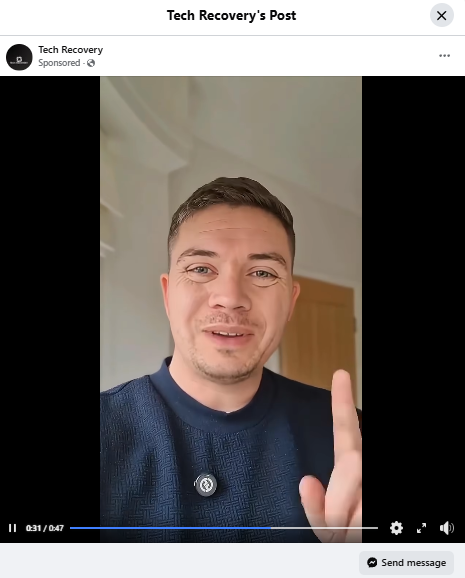 | https://www.facebook.com/reel/1418895723356729/ |
| Mr Blake | https://www.facebook.com/profile.php?id=61583918826116 | 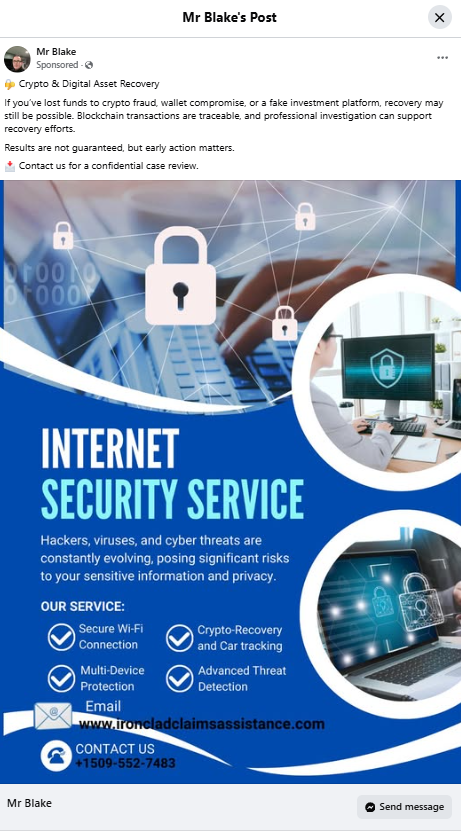 | https://www.facebook.com/permalink.php?story_fbid=pfbid02v76kes48nqxdognR1Bkzcnij1HociXpsSWg6JUzeUGx4brMfoat1ovvVxKjBPXD2l&id=61583918826116 |
| chrishacks | https://www.facebook.com/profile.php?id=61585486515038 | 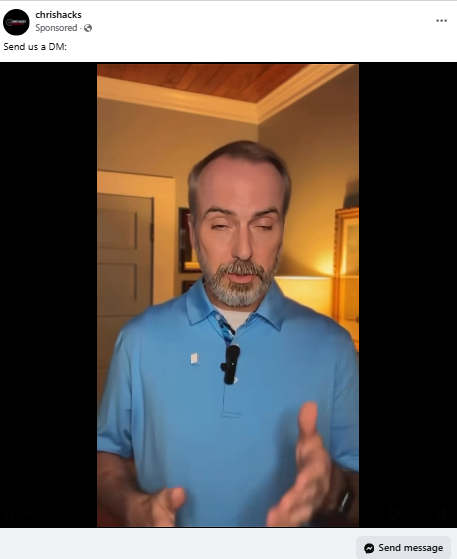 | https://www.facebook.com/reel/2393592307743906/ |
| Vantacorehacks | https://www.facebook.com/profile.php?id=61585351389353 | 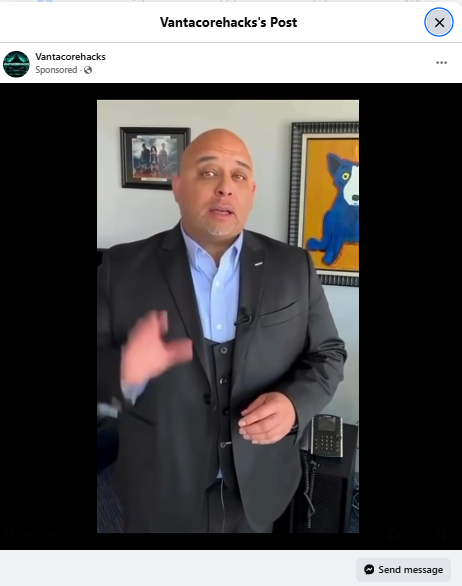 | https://www.facebook.com/reel/1152329510103644/ |
| Recovery Agent Hire’s Post | https://www.facebook.com/recoveryagenthire | 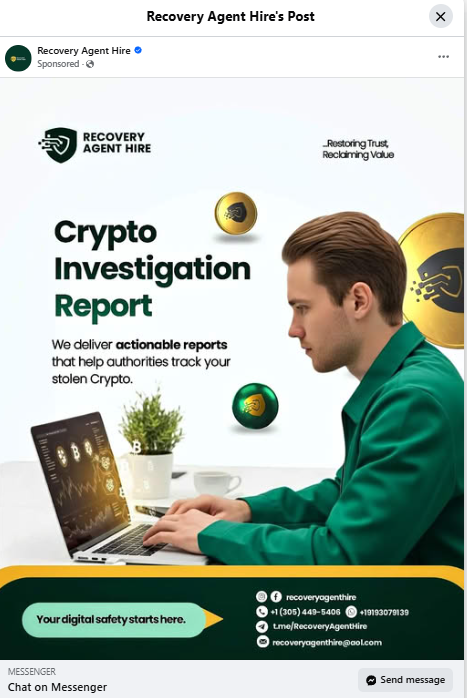 | https://www.facebook.com/recoveryagenthire/posts/pfbid02Qb85F5UBWRuPWYJjcXfAd3KxvW6sDBt12fddhmxa7sJL7e7Hdpm2DyfbeTFfJUU8l |
| izoncorey | https://www.facebook.com/profile.php?id=61566047053909 |  | https://www.facebook.com/permalink.php?story_fbid=pfbid02jR7buZ4gH1qFLFsBau6FxH4ZWmbvMWXKZBvWBUocBJAXcFQHj1ueGYjMc5PygkNgl&id=61566047053909 |
| FRED HACKS | https://www.facebook.com/profile.php?id=61584342583292 | 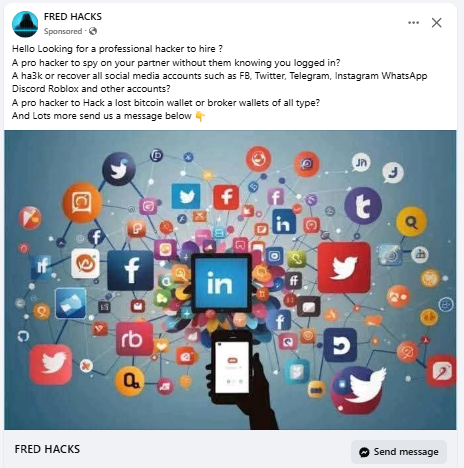 | https://www.facebook.com/permalink.php?story_fbid=pfbid02sMYWNmPQScqMfvnZg4fpDfyYsJVVnR7dVFpWmWKiFdRSpbLQabQpxoNWVfrPwM4Sl&id=61584342583292 |
| HackingSentry Solutions | https://www.facebook.com/HackingSentrysolutions | 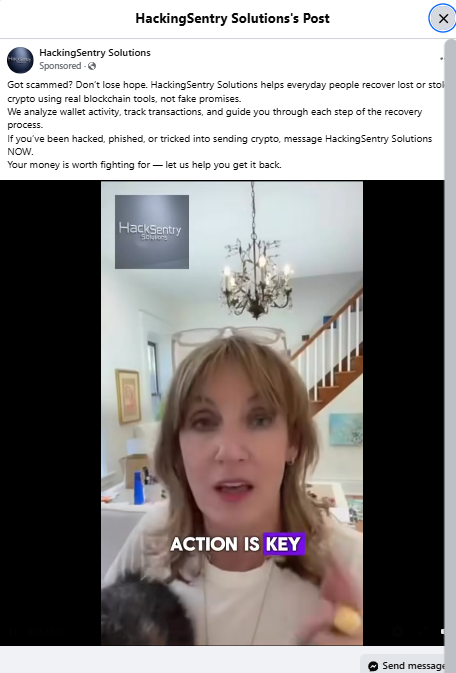 | https://www.facebook.com/reel/1481528382952687/ |
| Global Financial Recovery | https://www.facebook.com/profile.php?id=61578575470286 | 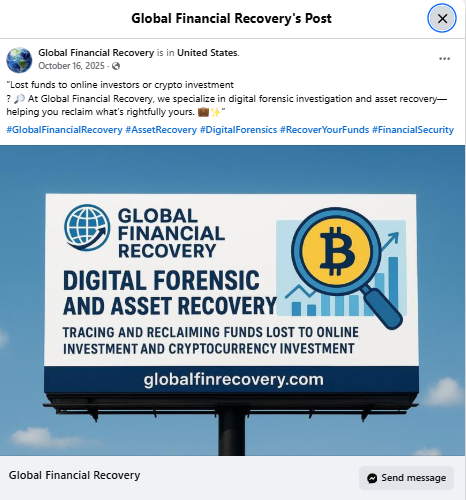 | https://www.facebook.com/permalink.php?story_fbid=pfbid02dGm8P1iyAitaAStvZKnH7UL6dZocbPDnWBQA1zc7Cykr4XC7eSntbMB6hps6uap4l&id=61578575470286 |
| KelTech Recovery | https://www.facebook.com/profile.php?id=61586214149982 | 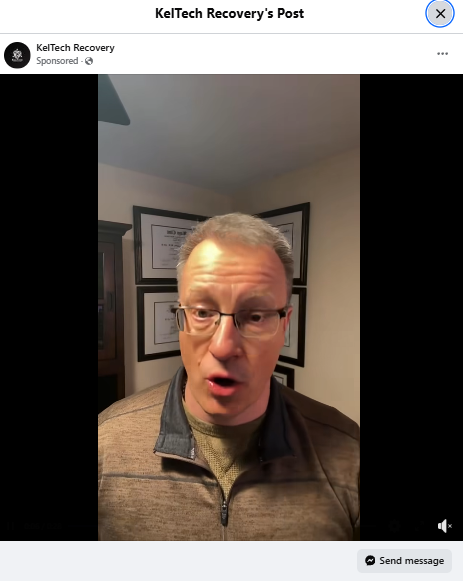 | https://www.facebook.com/reel/1439570251107591/ |
| Radware | https://www.facebook.com/profile.php?id=61552056865642 | 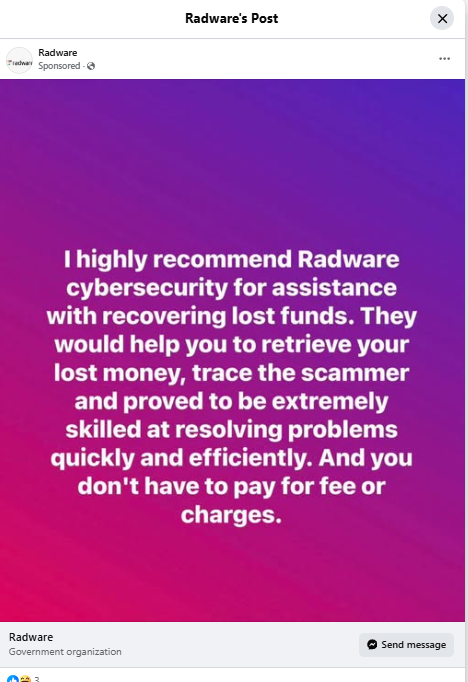 | https://www.facebook.com/permalink.php?story_fbid=pfbid0QFnyxRnEctyh6c9SvWd8VmybybA9jA85kU5aQv8dtSzFqwjMGbtQnEBJZUxHX1UXl&id=61552056865642 |
| Meta asset recovery | https://www.facebook.com/profile.php?id=61584683218384 | 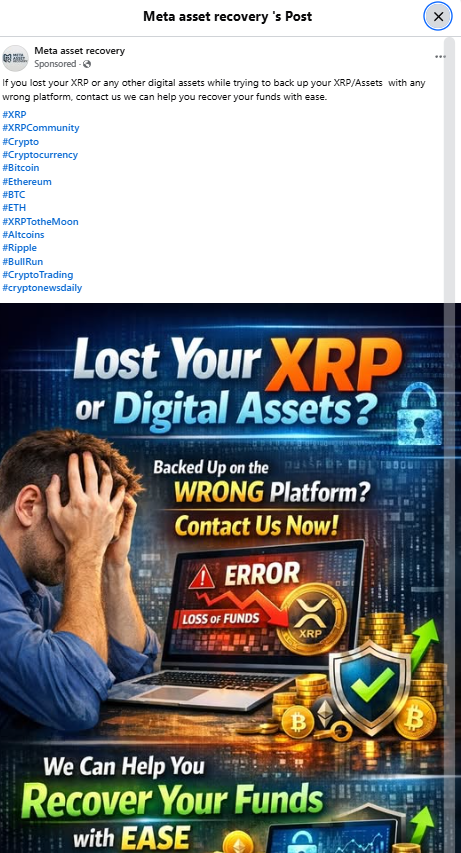 | https://www.facebook.com/permalink.php?story_fbid=pfbid03FLSa2ZcxdmcMxzUoahDSwjPszR4cy3WjESrkQnbaWLKayKQV3cQedm5QmHPodf6l&id=61584683218384 |
| Jayteehack | https://www.facebook.com/profile.php?id=61563293533327 | 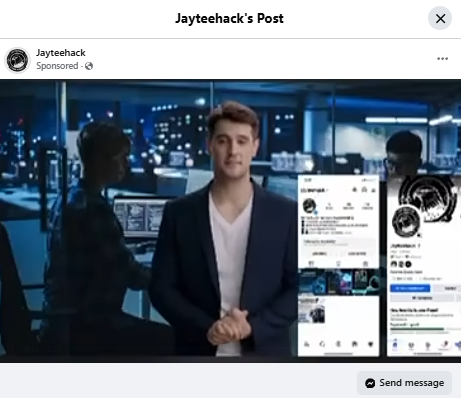 | https://www.facebook.com/61563293533327/videos/1445144300300301/ |
| Recovery Team | https://www.facebook.com/profile.php?id=61586488096252 | 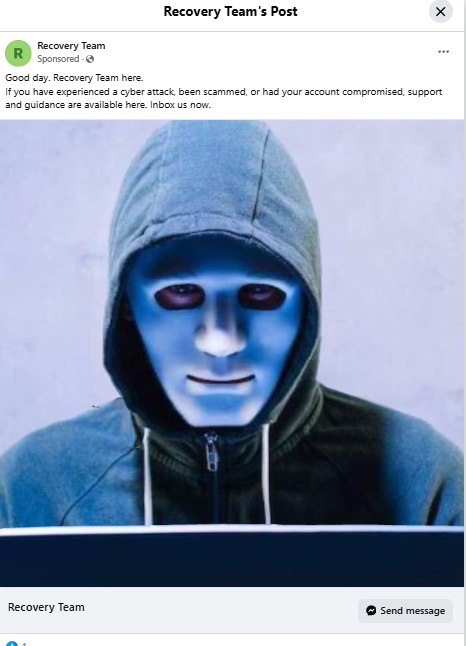 | https://www.facebook.com/permalink.php?story_fbid=pfbid0TuLH1m4b2qu6Ata8F9kmRQ9kyrwLBzo6chDJ3KrZvMvRQ8SpoJnc8xt1uAJP8uALl&id=61586488096252 |